

Law firms are still buying interfaces while AI is redesigning workflows
Inside Legal Platforms, by Bart Bogaerts
The screen is no longer where the real work happens
Legal technology used to follow a predictable structure. Every process had its own system, every system had its own interface, and legal professionals spent a large part of their day moving between environments. Documents lived in one platform, matter information in another and financial data somewhere else again. Workflows depended heavily on people manually navigating between systems to keep work progressing.
The role of the systems in place
That model made sense in a world where software revolved around users actively operating applications themselves. The interface defined the experience. Increasingly, that logic is starting to shift. AI is pushing more activity underneath the visible layer of software, allowing workflows to move across systems without users constantly switching environments themselves.
The interesting part is that this shift does not replace existing platforms. Law firms will still rely on document management systems, CRM environments, financial software, HR platforms and knowledge systems. What changes is the role those systems play. They remain systems of record, while agents and orchestration layers increasingly handle actions across them.
Agents move through workflows
A large part of the legal AI market still focuses heavily on interfaces: drafting assistants, standalone chat environments and productivity tools layered on top of existing software. While useful, that is only a small part of the broader shift already taking place underneath.
Legal work has never really been document driven. It has always been workflow driven: opening matters, reviewing obligations, checking precedent, validating billing requirements, routing approvals and preparing client communication are all connected activities that move through multiple systems and people at the same time.
Agents are becoming relevant because they can increasingly operate within those workflows instead of remaining limited to isolated tasks. That changes the role of AI substantially. The discussion moves away from “which tool generates the best answer” toward questions around orchestration, governance, permissions and workflow execution. As Bart Bogaerts puts it: “Most firms are still treating AI as a tool. The real shift starts when AI becomes part of the operating model.”

The real advantage sits underneath the model
Many firms still approach AI as a race toward the best model or the newest assistant. That advantage is likely to become temporary very quickly. Models evolve fast and capabilities are converging across vendors. What is far more difficult to replicate is governed context. Matter history, client requirements, precedent, internal knowledge, permissions, workflows and institutional memory form the real foundation for useful legal AI. Without that structure, AI may produce convincing output, but it remains disconnected from the environment of legal work.
This is why data architecture and governance are becoming strategically important again. Firms that organize knowledge properly, maintain structured matter environments and connect workflows intelligently are creating conditions in which AI can operate more reliably and more securely.
Bart: “The firms that move ahead will not be the ones with the most AI tools. They will be the firms with the best governed context.”

The workflow becomes more important than the interface
This also changes how legal platforms should be evaluated. For years, the market focused heavily on dashboards, navigation and user experience at the interface level. Increasingly, the more important question becomes whether the underlying workflow is connected well enough for intelligence and automation to operate safely within it. That requires firms to think differently about technology decisions. Questions around governance, auditability, permissions, metadata, integrations and matter structure become much more important once agents begin operating across systems.
The quality of orchestration underneath the interface starts determining the quality of the user experience above it. That is also why many standalone AI tools struggle to create long-term value inside legal organizations. They may generate useful output, but they often operate outside the operational context of the firm. While legal work happens inside governed workflows.

Why Microsoft’s direction matters
This is one of the reasons Microsoft’s ecosystem has become increasingly relevant in legal AI conversations. Copilot does not simply retrieve documents. It relies on Microsoft Graph, SharePoint structures, permissions, metadata and organizational context to determine what information is relevant, authoritative and accessible to a particular user at a particular moment.
That underlying structure matters enormously in legal environments, where context and confidentiality are critical. A document only becomes meaningful when understood in relation to the matter, the client, previous communication and the surrounding workflow. The role of the DMS changes as a result: it functions increasingly as part of the operational memory of the firm.
Epona and the orchestration layer underneath legal work
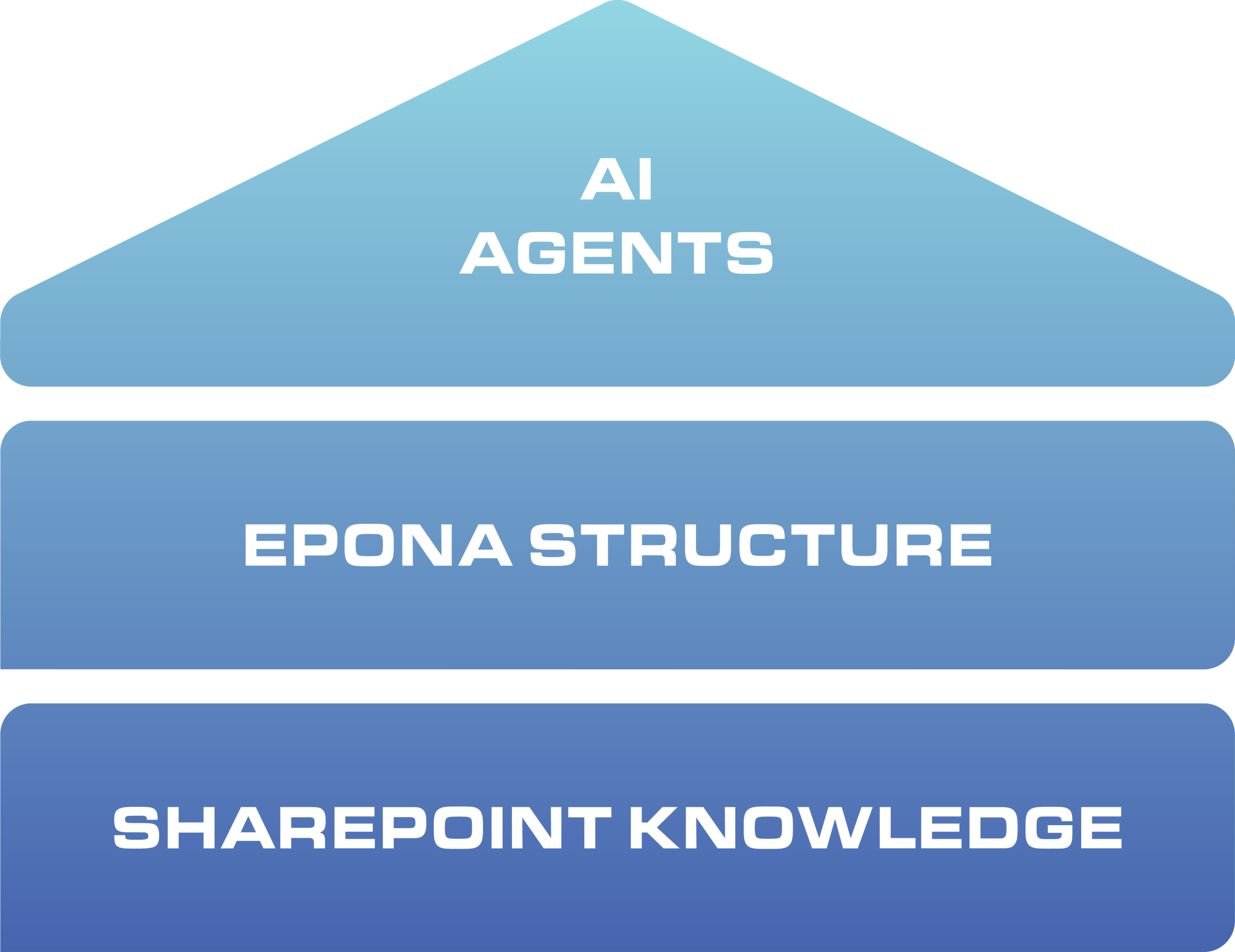
This direction aligns closely with how Epona approaches legal platforms. Epona365 is not designed as a separate AI destination. It is built around the idea that legal professionals should work inside the Microsoft environments they already use, while preserving matter structure, governance and legal context underneath. This is important once agents begin interacting with systems directly. AI only becomes useful when it can operate within trusted workflows and governed environments. Matter-centric structure, permissions, metadata and document relationships are no longer operational details in the background. They become part of the intelligence layer itself.
As Bart summarizes it: “The future legal platform is the orchestration layer connecting knowledge, workflows, governance and AI behind the scenes.”
Legal platforms are entering a different phase
The legal market spent the last two years experimenting with AI tools. The next phase is less about experimentation and more about infrastructure. Firms are beginning to realize that long-term value will come from environments where workflows, knowledge and governance are connected well enough for AI to operate safely and effectively at scale. The firms that understand that shift early will move beyond tool adoption toward workflow transformation. The firms that do not may eventually discover that their systems still store information, but no longer actively support how legal work gets done.


7 checks before scaling AI across legal work
Discover seven practical checks to assess your AI readiness and gain a clear framework for evaluating whether your document environment is prepared to support AI safely and at scale.
This pages guide also includes a practical DMS, Compliance & AI Checklist that can be used during evaluations, governance workshops and internal readiness reviews.