

Epona KMS
Your knowledge. Curated. Discoverable.
Epona Knowledge Management software turns that scattered knowhow into curated, trusted, reusable knowledge — and brings AI Agents into the workflow to help classify, improve findability, and accelerate reuse.
Built on Microsoft SharePoint and designed to operate within a Microsoft 365 environment, including Copilot, enabling organizations to leverage existing AI capabilities while maintaining control and governance aligned with Microsoft’s security and compliance foundations.
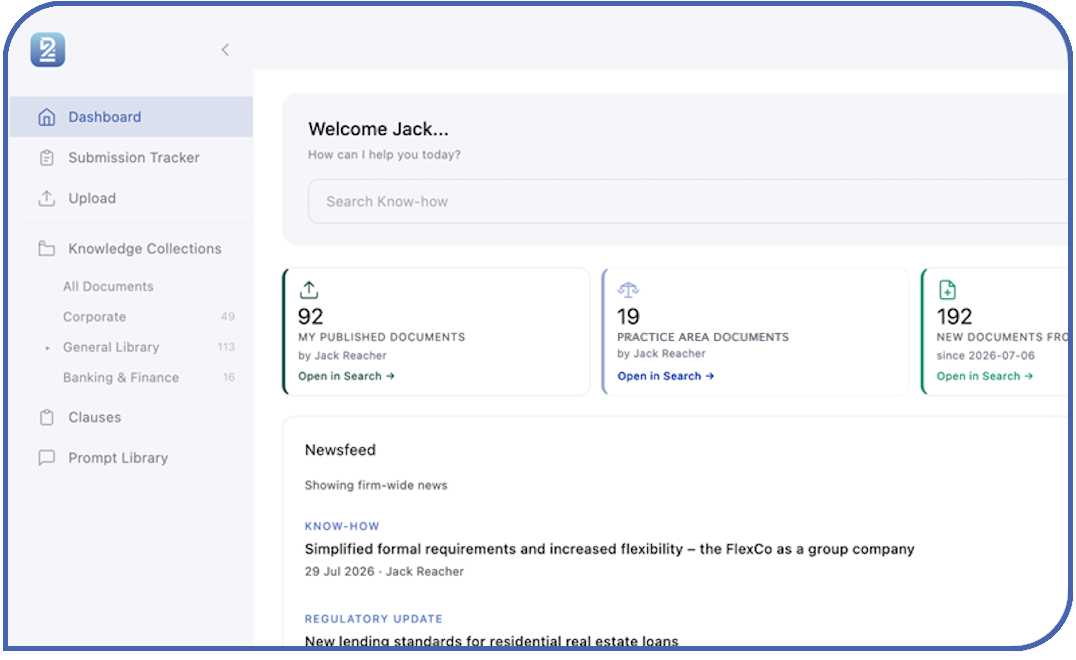
Know How, Curated.
Managed. Trusted.
Epona’s KMS gives lawyers a managed and curated set of know‑how — not another document dump. It is designed around one simple idea: Knowledge only creates value when lawyers can trust it, find it, and use it — instantly.
With Epona KMS:
- Know‑how is intentionally curated, not accidentally discovered
- Content is reviewed, classified, and maintained
- Lawyers see what matters, not everything that exists
The result? A clean, consistent, and reliable knowledge experience.
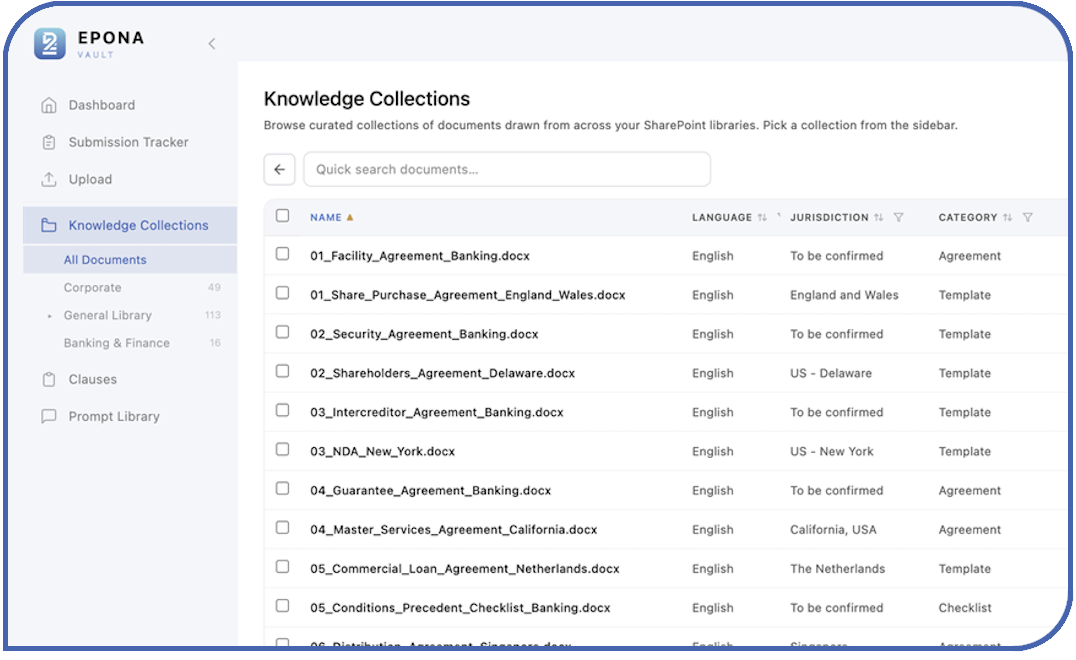
AI Agents Help
Knowledge Governance
Epona KMS uses AI agents to keep your knowledge base complete, structured, and up to date. AI automatically identifies gaps, suggests metadata, and improves discoverability, reducing administrative work for legal professionals.
What sets Epona KMS apart is its governance-first approach. AI provides recommendations, while designated experts remain in control of approvals and publication. The result is trusted knowledge that supports both people and AI without compromising quality, accuracy, or compliance.
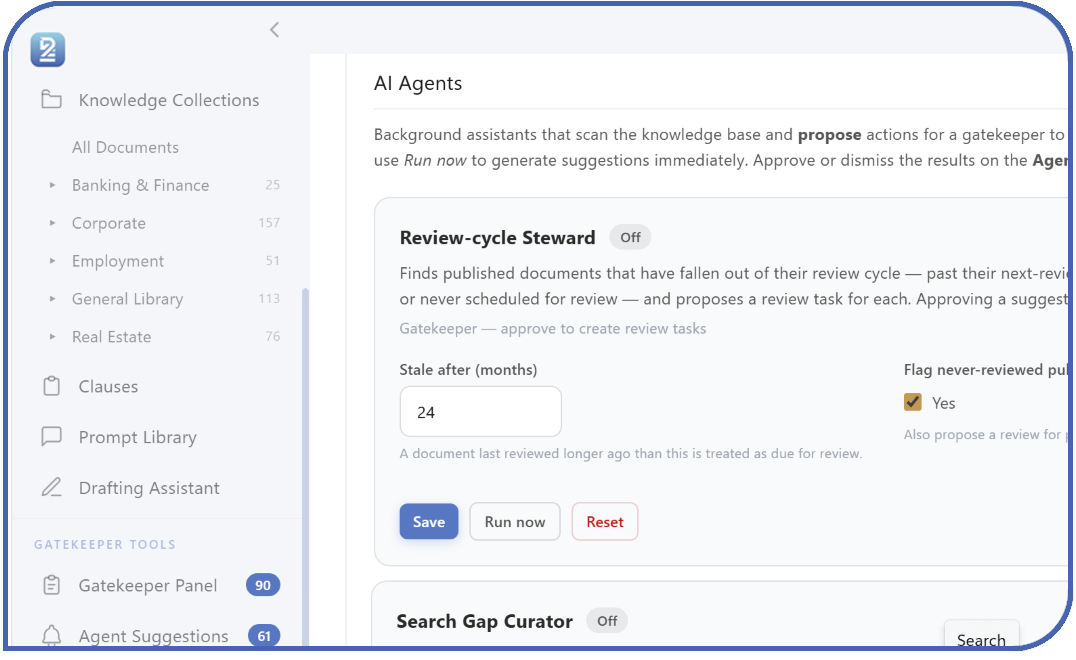
Your Firm’s Knowledge Is Your Advantage,
With AI You Now Can Actually Use It.
Built on SharePoint.
Designed for Lawyers.
At the heart of Epona KMS is curated content in Microsoft SharePoint — structured, governed, and secure. But this isn’t “raw SharePoint”. We transform SharePoint into a legal-grade KM platform:
- Clear structures per practice area and topic
- Controlled contributions and approvals
- Metadata that actually works
- Search that understands legal context
Lawyers don’t need to learn a new system.
They just find the right know‑how — fast.

One KMS. Any DMS.
Epona KMS is DMS‑agnostic. Whether your firm uses iManage, NetDocuments, or another document management system — Epona KMS works alongside it. And if your firm uses Epona365 as DMS, you unlock extra depth:
- Seamless promotion of documents from DMS to KMS
- Richer metadata and context
- Smarter lifecycle and governance controls
But the core promise remains the same for every firm:
Your knowledge. Your structure. Your advantage.

Use Your Own Know-How to Win.
Legal research platforms are essential. They give access to laws, cases, commentary — available to everyone. Epona KMS gives access to something no competitor can buy:
- how deals are structured
- how lawyers solve recurring problems
- how clients prefer things to be done
This is the intellectual capital of your firm — turned into a shared, reusable asset.
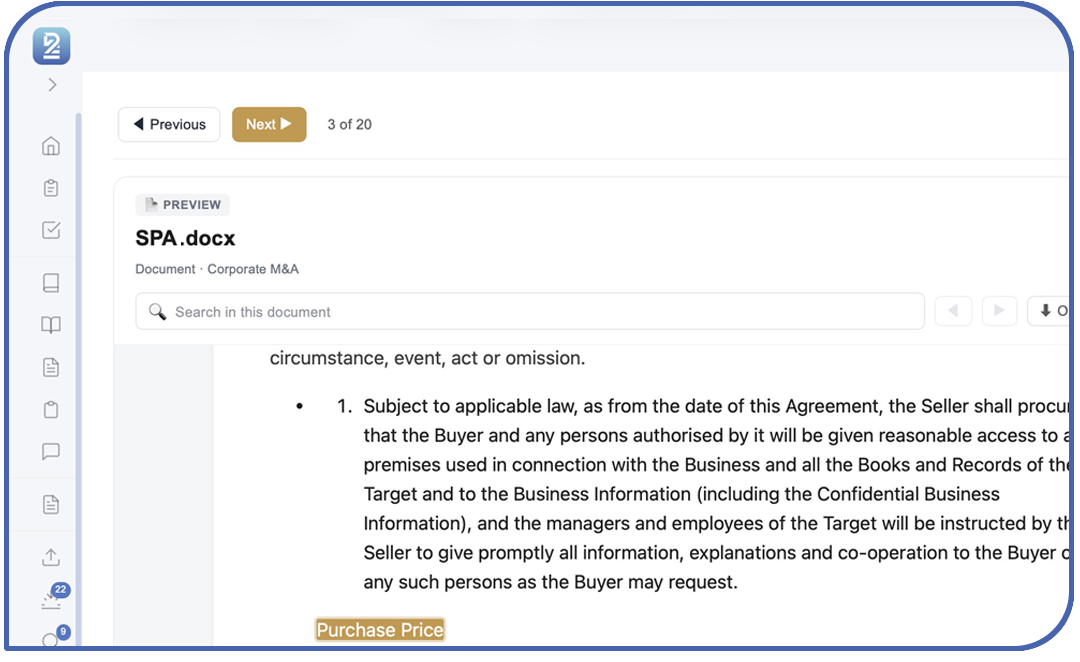
Easy to Use.
Easy to Find.
Easy to Trust.
Epona’s next‑generation KMS isn’t about features for KM teams only. It’s about adoption.
Lawyers get:
- Simple navigation
- Intuitive search
- Relevant results, not noise
- Confidence that what they find is current and approved
KM teams get:
- Control without complexity
- Governance without friction
- Insight into what knowledge is actually used
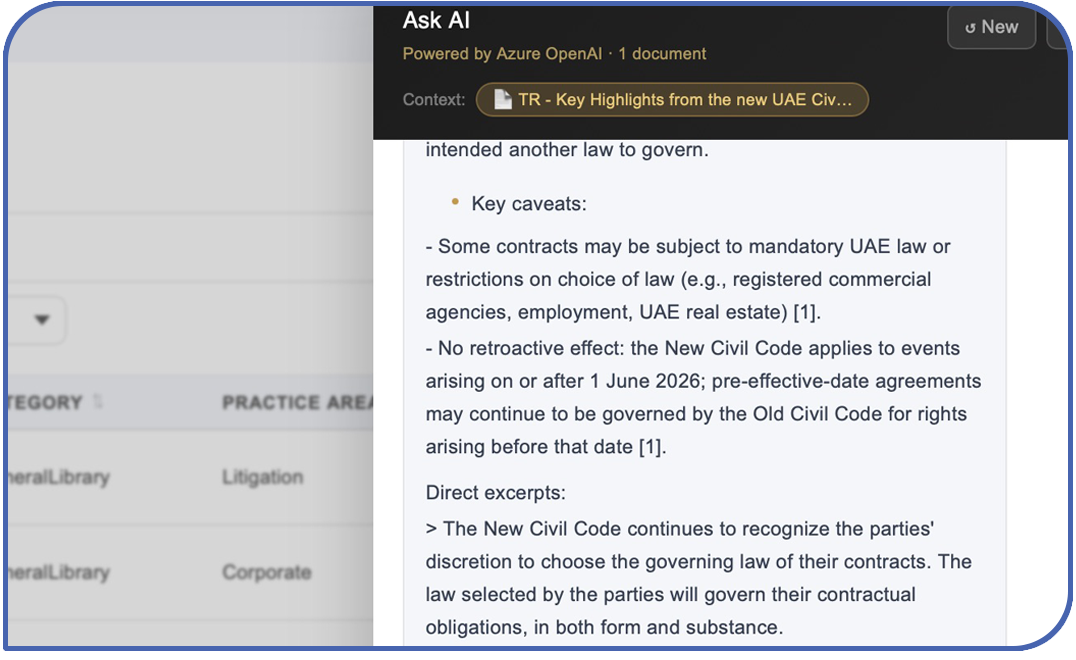
The screenshots on this page of Epona KMS reflects a product currently under development. Features, functionality, and design elements shown may change and should not be considered a commitment, guarantee, or representation of the final product.

Legal DMS & AI Readiness Scan
Discover 10 practical checks to evaluate whether your legal document environment provides the structure, permissions, metadata, and governance needed to support AI securely and at scale.
This guide also includes a practical Legal DMS & AI Readiness Scorecard that can be used to identify gaps, support internal discussions, and prioritise next steps across DMS, KMS, Purview, and Microsoft 365 governance.
Ready for the next step?
Our team can advise you on how to strengthen your legal team with powerful, AI-driven software solutions for case, document, and knowledge management.
Let’s work together, get in touch with us!
FAQ on New Epona Knowledge Management System for Legal (KMS)
A Knowledge Management System (KMS) for legal teams is designed to transform internal knowhow into a structured, reliable, and reusable asset. Core features include curated knowledge collections instead of unstructured document repositories, content governance with review and approval workflows, and structured classification using relevant legal metadata. Legal professionals benefit from intuitive search that understands legal context, clear organization by practice area, and fast access to trusted information. Epona’s KMS adds value by ensuring that knowledge is intentionally curated, continuously maintained, and immediately usable, enabling lawyers to focus on high-value work rather than searching or recreating information.
A successful KMS implementation requires a clear focus on governance, adoption, and content quality. Legal teams should define how knowledge is curated, who is responsible for maintaining it, and how updates are managed over time. It is critical to avoid creating another document repository and instead build a system that provides trusted, approved knowledge. Equally important is user adoption: lawyers need simple navigation, intuitive search, and confidence in the relevance of results. Epona’s approach addresses these considerations by providing a structured and governed knowledge layer on Microsoft SharePoint, combined with workflows that allow KM teams to maintain control without adding operational complexity.
When selecting a KMS, legal teams should evaluate whether the solution delivers curated knowledge rather than raw document access, supports governance and lifecycle management, and integrates seamlessly into the existing IT landscape. It is essential to verify that the system is designed specifically for legal workflows, including metadata structures and search capabilities tailored to legal context. Another key aspect is DMS compatibility, ensuring the KMS can work with existing document management systems. Epona KMS stands out by being DMS-agnostic, supporting systems such as iManage and NetDocuments, while also offering deeper integration for firms using Epona365.
A KMS complements a Document Management System (DMS) by acting as a curated knowledge layer on top of document repositories. While the DMS stores documents, the KMS selects, structures, and enriches key knowledge assets, making them easier to find and reuse. Epona KMS works alongside any DMS and enables the promotion of relevant documents into a curated knowledge environment. For organizations using Epona365, this integration is further enhanced with richer metadata, improved governance, and streamlined lifecycle management. The result is a clear separation between storage and knowledge, enabling legal teams to access what truly matters without navigating large volumes of documents.
Yes, Epona KMS is designed as a DMS-agnostic solution. It integrates with leading document management systems such as iManage and NetDocuments, allowing firms to retain their existing infrastructure while enhancing knowledge accessibility. This flexibility ensures that firms can implement a modern KMS without requiring a full system replacement. For organizations using Epona365, additional benefits are available, including seamless document promotion and enhanced metadata capabilities.
Epona KMS differentiates itself by focusing on curated, trusted knowledge rather than unstructured content. It transforms Microsoft SharePoint into a legal-grade knowledge platform with governance, structure, and context specifically designed for legal professionals. Unlike traditional systems, it prioritizes adoption by delivering intuitive navigation, relevant results, and confidence in the accuracy of information.
Epona’s next‑generation KMS isn’t about features for KM teams only. It’s about adoption. It offers simple navigation, intuitive search, relevant results, not noise. So lawyers get the confidence that what they find is current and approved. Not another repository. Not another system lawyers avoid. But a living knowledge layer on top of your firm’s experience. Your know how. Curated. Discoverable. Powerful. That’s the future of knowledge management.
And Epona KMS is DMS‑agnostic. Whether your firm uses iManage, NetDocuments, or another document management system — Epona KMS works alongside it. And if your firm uses Epona365 as DMS, you unlock extra depth: Seamless promotion of documents from DMS to KMS, richer metadata and context. And smarter lifecycle and governance controls.