What is happening in the Baltics?
Event recap - FutureLaw in Tallinn
Legal innovation from Tallinn
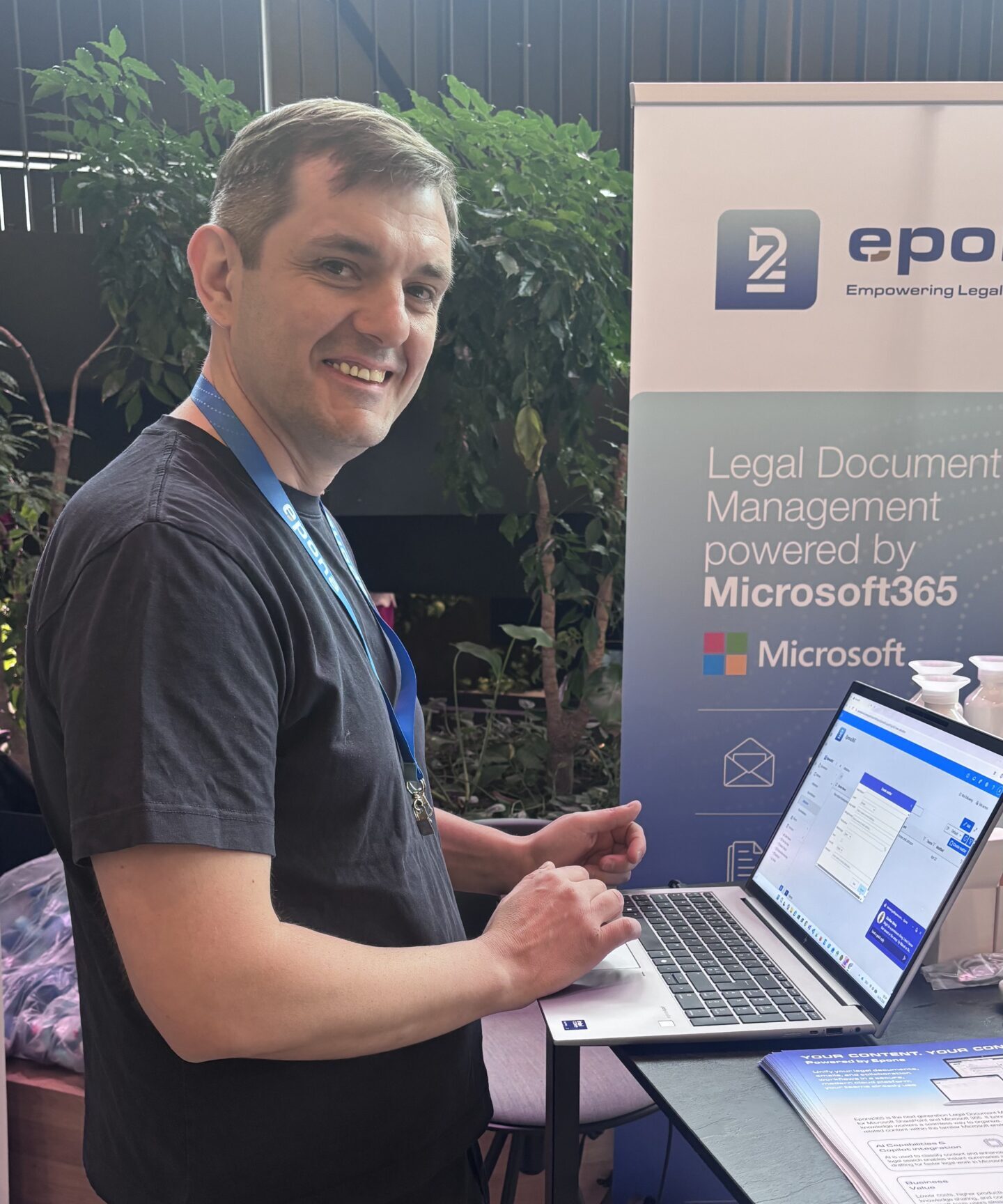
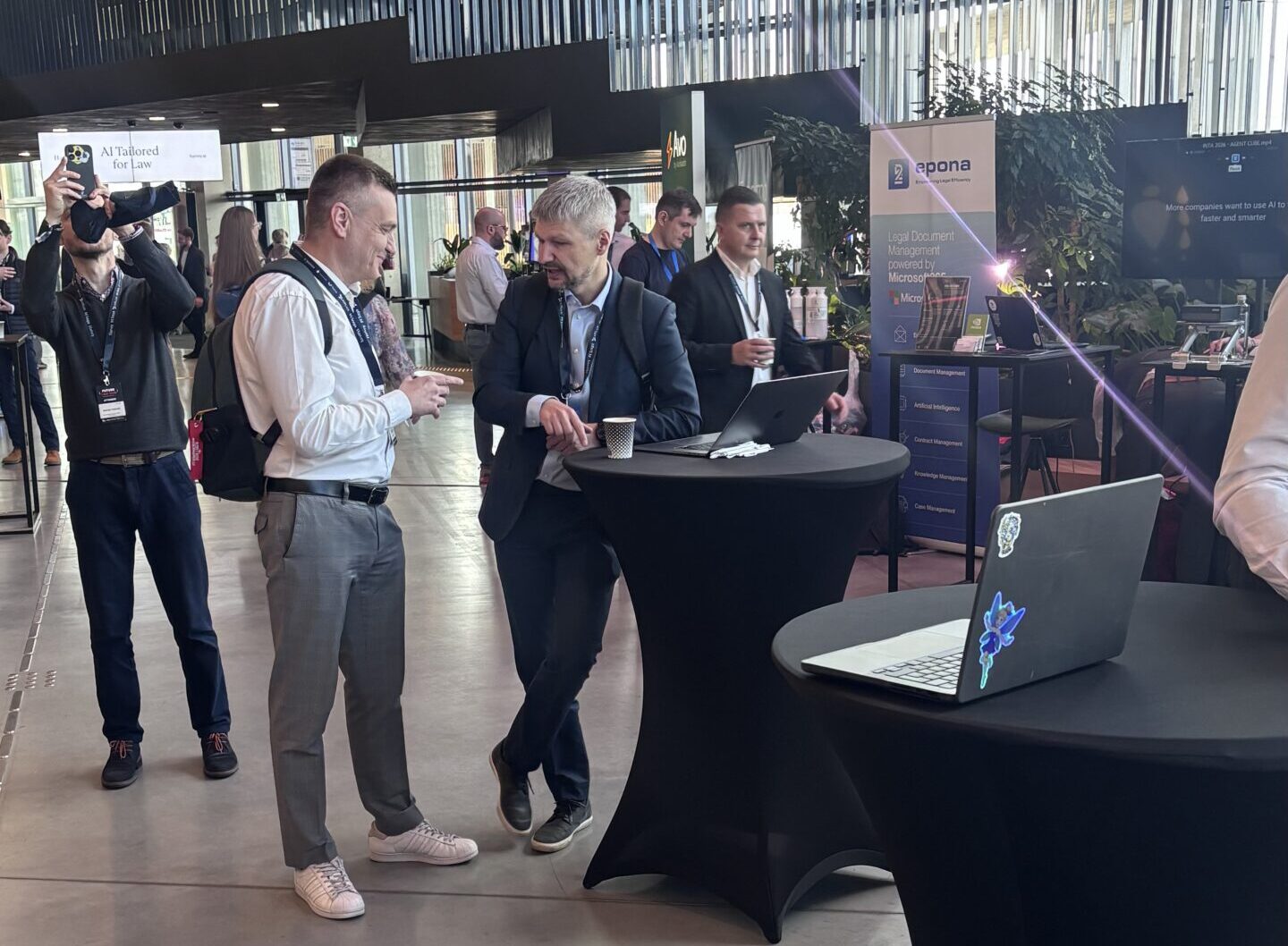
Tallinn is not the first city that comes to mind when people talk about legal innovation in Europe. London, Amsterdam, Copenhagen or Stockholm are the usual names. Yet anyone who has spent time in Estonia quickly understands why the Baltics deserve more attention. At FutureLaw in Tallinn, that became very clear. Epona’s Bart Bogaerts visited the event together with Bernard, his technical colleague from Denmark, and came back with a simple observation: this did not feel like a traditional vendor fair. It felt more like a focused knowledge event, with strong speakers, open conversations and a practical energy around what legal technology should do next.
Bart described the atmosphere as open, human and future-oriented, with a compact setting that made real conversations easier. That’s a big advantage as Legal technology events can easily become noisy: new tools, big claims, AI demos and product pitches. In Tallinn, the conversation seemed to move in a slightly different direction with more curiosity and specific questions about what helps legal professionals work better.
A region used to digital thinking
Estonia gives that conversation a particular backdrop. The country has a strong digital identity and a long track record in digital government, public infrastructure and e justice. Estonia’s e File system connects courts, police, prosecutors, prisons and other justice institutions through electronic case management, with communication between parties handled digitally. The Council of Europe also notes that Estonia’s digital court file is in use and allows court users and professionals to work with digital files through the public e File portal and court information systems.
That kind of environment shapes expectations. When digital processes are already part of public life, legal innovation feels less abstract. The question becomes more practical: how do legal teams organise their information, connect their workflows and use AI responsibly inside the systems they already rely on?
FutureLaw’s own positioning fits that picture. The event focuses on AI, automation, data privacy and digital governance, with a programme built around strategic and practical insights for legal professionals.

The Baltics feel active, not crowded
One of Bart’s strongest impressions was the energy in the room. He did not describe the market as fully mature or easy to read from one event, which is important. The Baltics are not one simple market, and Estonia, Latvia, Lithuania, Poland and Ukraine each have their own legal culture and pace. But the broader region did feel active. People were curious, open to new ideas and clearly looking for direction.
Many legal professionals are interested in AI and legal technology, yet they also struggle to see the full picture. Bart mentioned a conversation where someone said they could no longer see the forest for the trees: who does what, where should a firm start, which tools matter, what should be built first?
That confusion is not unique to the Baltics. It is visible across Europe. The AI conversation has moved fast, and many firms now face a crowded landscape of drafting tools, copilots, contract review platforms, search tools and automation ideas. The more tools appear, the more important the underlying question becomes: what is the foundation that allows legal teams to use these tools safely and effectively?
Smaller markets can move differently
The Baltic legal market also has a regional character. Leading firms often operate across Estonia, Latvia and Lithuania, and client work regularly has a cross border dimension. Recent Baltic law firm market research by Kantar Prospera, referenced by regional firms, surveyed 375 client organisations and private clients across Estonia, Latvia and Lithuania, showing a market with active competition and regional comparison between top firms.
For legal technology, that creates an interesting dynamic. Smaller markets can sometimes move faster because relationships are closer, decision lines are shorter and innovation is easier to discuss across firms, vendors and institutions. At the same time, cross border work creates a real need for consistency: matter structure, document access, knowledge sharing, security and collaboration cannot depend on local habits alone. That is where the conversation becomes relevant far beyond Tallinn.

AI needs more than enthusiasm
The legal AI conversation in the Baltics appears to be entering the same phase as the rest of Europe. The excitement is still there, but the harder questions are becoming more visible. How do we move from experiments to real workflows? How do we make sure AI works with the right documents? How do we protect confidentiality? How do we make internal knowledge usable? How do we avoid adding another disconnected tool to an already fragmented environment?
For Epona it is clear: a modern legal DMS can no longer be presented only as a place to store documents. That story feels too small for where the market is going. The more relevant story is that the DMS becomes part of the legal data and knowledge layer. It is where matter history, documents, emails, permissions, metadata and internal context become available for smarter legal work.
Bart put it clearly in the follow up conversation: the old paradigm was DMS as repository and storage. The new paradigm is different. Data lives in Microsoft 365, AI becomes the interface, governance becomes the challenge and the DMS becomes part of the knowledge layer that makes data available for AI.
For Epona, that is exactly the conversation worth having. Legal innovation starts to become useful when documents, knowledge, workflows and governance come together in the environment where legal professionals already work. In many firms, that environment is Microsoft 365. The next step is making it legal ready, AI ready and useful in daily practice.