

Epona365 - LMS
We have asked
AMS Advocaten
AMS Advocaten shares how structure, secure matter-based working and practical AI use are shaping the future of legal work with Epona.
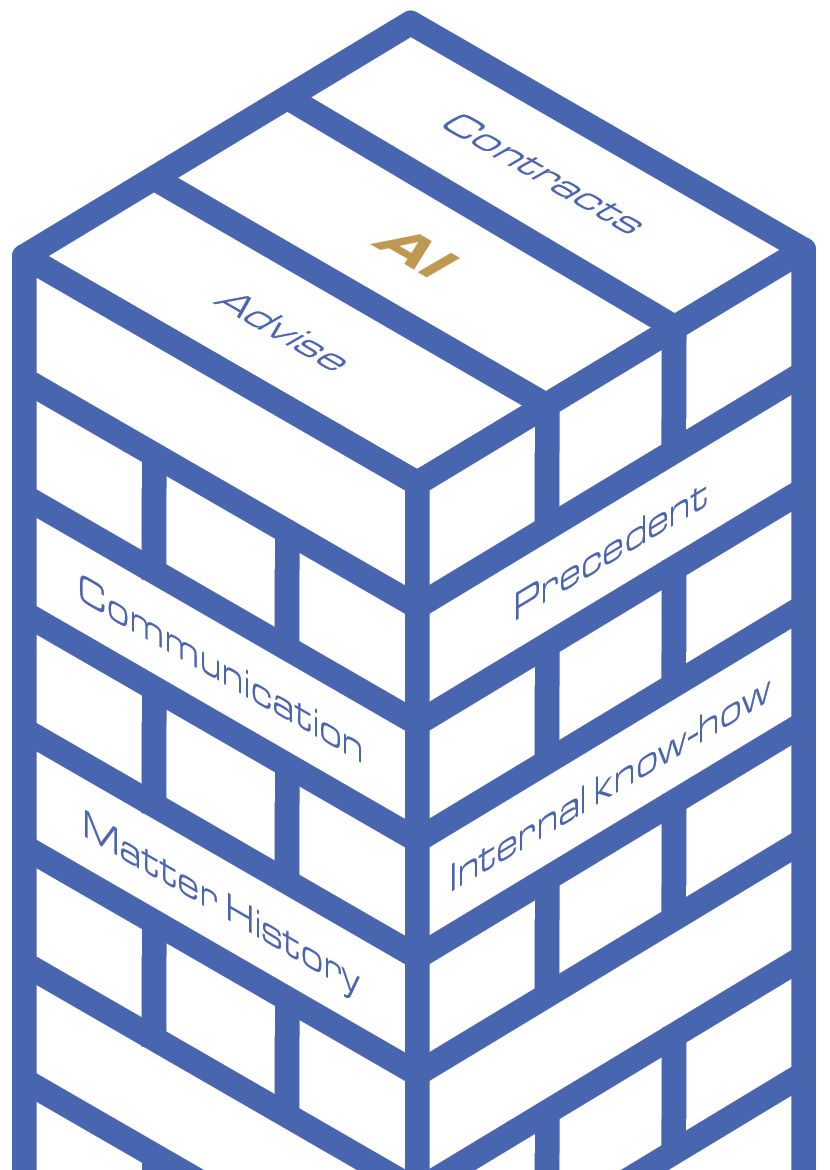
The legal AI conversation starts with structure
AMS Advocaten sees the DMS as the foundation for smarter legal work
For AMS Advocaten, document management has never been just about storing files. It has always been about structure and control. That was true years ago, and it remains true today. What has changed is the context around it. Legal work is still built around matters, documents, emails and rights management, but the rise of AI has added a completely new layer to what a document management system needs to support.
“At its core, our workflow has not changed that much,” says Hidde Reitsma, who has worked closely with Epona for many years. “We have matters and those matters consist of documents, correspondence and information. All that needs to be kept together clearly and securely. A DMS is still ideal for that.” Legal work is not suddenly unrecognisable just because new technologies appear. But AI is changing what firms expect from the systems underneath that work. Where firms once focused mainly on storing and retrieving information, they are now also asking how that information can be analysed, summarised and used responsibly within the boundaries of professional confidentiality.

Why structure matters more in the age of AI
At AMS Advocaten, each matter is clearly separated at library level. Rights are carefully distributed, and data is organised per file rather than being stored in one large, vague container. Years ago, that structure mainly supported good document management. Today, it also creates the conditions for careful experimentation with AI. “As professionals, we have confidentiality obligations,” Hidde explains. “We must prevent information from one matter from being used automatically in another matter if we do not want that. So, it is very helpful that dossiers are clearly separated, not only on the client level but even on the dossier level.”
That point is central to how the firm looks at the future. AMS Advocaten is not interested in using AI recklessly or as a gimmick. The focus is on practical, defensible use cases that fit the reality of legal work. Hidde is currently piloting possibilities such as agents at library level, where AI can help answer questions like what the current status of a matter is, what happened at a certain point in time, or what the latest email exchange is about.
That is not yet being rolled out firm-wide, but the direction is clear. The combination of matter-based structure and Microsoft-based infrastructure makes that future achievable.

From document storage to document intelligence
The shift is already visible in daily work. AMS Advocaten uses both a Teams-based OpenAI account and Copilot. Hidde admits he was disappointed with Copilot for quite some time, but that has changed. The progress has accelerated, especially in document analysis and in the first stage of sorting and reviewing larger sets of information. “Something you previously had several people working on can now partly be done with AI,” he says. “It is becoming harder to justify letting junior people spend days reading large sets of contracts at high hourly rates for a first review, when AI can already help sort, structure and identify relevant points.”
That does not mean legal expertise is becoming less important. On the contrary, the role of the lawyer becomes sharper. AMS Advocaten is a relatively compact firm where lawyers are expected to carry matters independently and take responsibility early on. In that context, AI is less a replacement for junior talent and more a support for efficiency and focus.

Why the DMS remains the backbone
The real backbone, however, remains the DMS itself. Hidde describes it as unthinkable to work without it. Before the current setup, documents were often stored more manually in SharePoint folders, emails did not automatically become part of the file, and each person effectively maintained their own mailbox and folder logic. That created fragmentation, uncertainty and limits to collaboration.
“The backbone of a matter is email,” he says. “If you do not manage that properly, you lose oversight very quickly. For me, it is unthinkable to have a dossier without the features that the DMS gives us.” That is also where Epona’s value remains very tangible. Part of that value lies in the things that are not particularly sexy, but absolutely essential: intuitive working in Outlook, clean integration into Microsoft 365, browser-based uploads, reliable access, and a structure that supports the way lawyers actually work.
“The most intuitive way of working inside the Office environment remains the backbone,” Hidde says. “That may not sound exciting, but it is the real strength of the product.”

A realistic view on knowledge management
AMS Advocaten also takes a realistic view of knowledge management. The firm has had a KMS add-on for years, built around tagged documents that could theoretically be reused under certain conditions. In practice, however, building and maintaining a rich, reusable knowledge base has proven difficult. Legal documents are confidential, anonymisation is complicated, and even with AI support there is still a real need for human checking before anything can safely enter a broader pool. That is why Hidde remains somewhat critical of overly optimistic KMS ambitions. In practice, lawyers still often go back to their own archives, their own previous work, and their own trusted models. AI may help with anonymisation and structuring in the future, but knowledge management will only become truly valuable when it fits the reality of legal work rather than adding more administrative burden.
What AMS expects from Epona next
That practical mindset also shapes Hidde’s expectations for Epona in the coming years. He does not expect endless experimentation or flashy proof-of-concepts that disappear after a few months. What he would value most are well-thought-out best practices: useful agents within dossiers, structured support for procedural files, and add-ons that help firms benefit from AI without having to invent every workflow themselves.
“I can imagine Epona offering best practices for agents within a dossier,” he says. “Not every firm needs to reinvent that wheel itself.” Communication with Epona remains one of the reasons AMS Advocaten values the relationship. The lines are short, support is accessible, and improvements or adjustments can be discussed directly.

The future stays human
Looking ahead, Hidde expects AMS Advocaten to remain at the front of AI adoption, though always with caution and professional judgement. He sees AI becoming normal in areas such as analysing datasets, summarising information and supporting legal reasoning. At the same time, he remains convinced that litigation strategy, judgement and client relationships will stay deeply human. Clients, for their part, are not shocked by the use of AI. In fact, many increasingly expect efficiency and are perfectly comfortable with firms using modern tools, as long as they do so responsibly. The real challenge is not whether AI is used, but how consciously and competently it is applied.
For AMS Advocaten, that brings the story back to the same foundation it started from: structured matters, clear rights, integrated email and a DMS that works the way lawyers need it to. The tools around legal work may evolve quickly, but without that backbone, none of the rest really works. And that may be the clearest sign of all that document management has not become less important in the age of AI. It has become more important than ever.