The AI Debate is over. Now comes the real work for Legal Teams.
By Marcel Lang
and what to do about it in 2026
AI in legal has officially left the “innovation lab.” Last year, many firms experimented because they felt they had to: competitors were talking about it, vendors were marketing it, and everyone wanted to know if AI could help with drafting, review, or research. But in 2026, the tone has changed. As Marcel Lang, one of the most forward-looking voices in legal technology, puts it: “AI is there. It’s no longer about experimenting. It must become part of the firm’s infrastructure.”
That shift matters. Because when something becomes infrastructure, it stops being optional. It gets governance, it gets budget, it gets leadership attention and it gets built into the systems that run the business of law. Below are five reasons AI isn’t going away in legal document management, and what legal teams should do next.
“Legal knowledge management has always been hard. Not because firms lacked documents, but because they lacked tools to unlock the meaning inside those documents at scale.”
Reason #1:
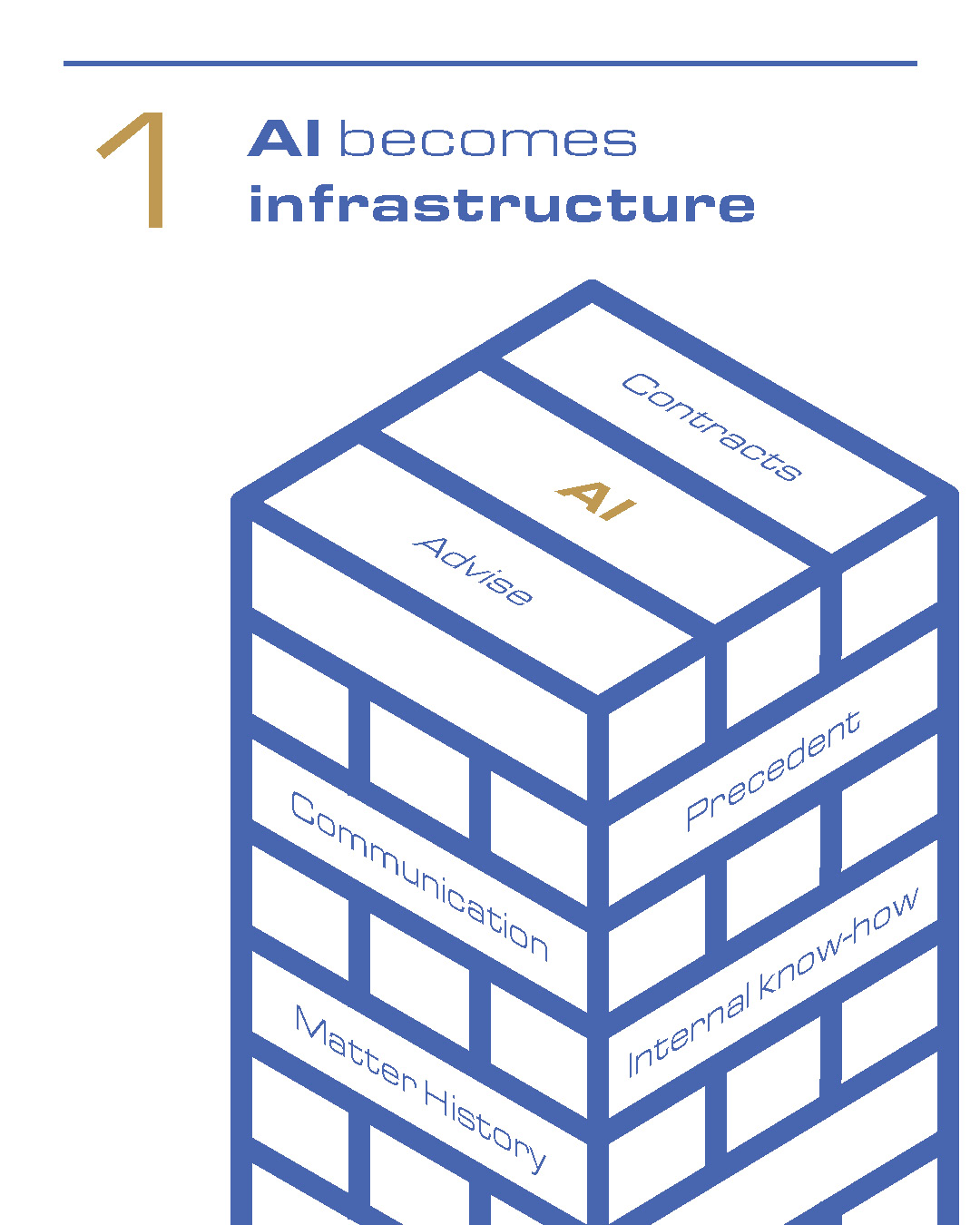
AI is moving from “tool” to “operating layer”
For years, firms treated AI like a separate product: a new app, a pilot project, something you could add on top of existing workflows. That model won’t last. Marcel’s view is blunt: AI won’t remain an external tool. It will become part of your core platforms, especially the DMS and case management systems.
Why? Because those platforms already contain the most valuable asset legal teams have: content and context. Contracts, advice, precedent, client communications, internal know-how, matter history: this is the substance of legal work. When AI can reason over that context safely, the DMS becomes something bigger: a legal operating system. Not because “the DMS is trendy,” but because it’s where the firm’s knowledge actually lives.
Reason #2:
The legal market is chasing “stickiness”, and the DMS is the stickiest system
AI tools are everywhere. Many of them are impressive and some are genuinely helpful. But firms are learning a strategic reality: a lot of these tools are not “sticky.” If a tool can be swapped with a new vendor next quarter, it won’t become your foundation. Legal teams may test multiple solutions, but long-term value goes to platforms that:
- live inside the daily workflow
- integrate with everything else
- hold the knowledge base
- are hard to replace (by design)
Marcel describes “stickiness” in practical terms: finance systems, practice/case management, docketing, and the DMS, don’t get replaced casually.
A DMS replacement isn’t a license switch. It’s a major strategic and operational shift. It involves migration, adoption, governance, training, and risk. That’s why the DMS remains a board-level decision at many firms. So when AI becomes infrastructure, it naturally gravitates toward the sticky systems—because that’s where long-term value can be captured and defended.

Reason #3:
Search is becoming Q&A: context and reasoning change everything
Keyword search is a legacy behavior. It’s what we do when systems can’t truly understand meaning.
But legal teams don’t want “documents with these words.” They want answers with reasoning, grounded in matter context and internal precedent. Marcel explains it as a transition from “searching” to “having a conversation with the system.” Instead of hunting through millions of files, the user asks:
“What did we do last time in a similar matter?”
“What are the risk positions we usually take in this clause?”
“Summarize the correspondence and highlight the decision points.”
“What should we consider in this type of transaction, based on prior matters?”
This is the practical impact of semantic indexing and contextual AI: the system doesn’t just retrieve, it guides. And once teams experience that, they won’t go back. Because it changes the economics of legal work: less hunting, less duplication, fewer missed precedents, and faster first drafts.

Reason #4:
Knowledge management is finally becoming real (because AI can unlock it)
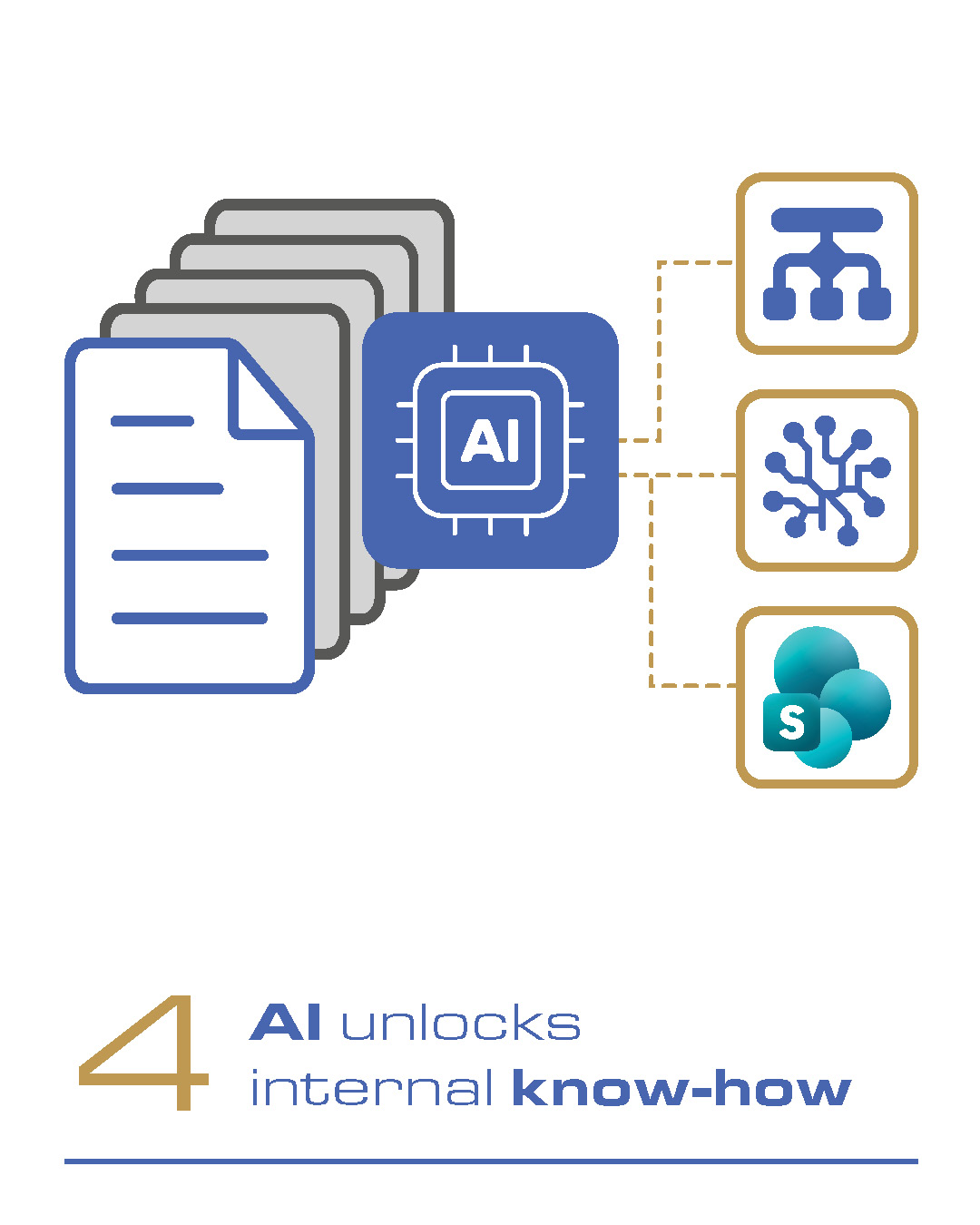
Legal knowledge management has always been hard. Not because firms lacked documents, but because they lacked tools to unlock the meaning inside those documents at scale.
Marcel’s point is simple: the data was always there. What’s new is the ability to reason over it.
This is why knowledge management is re-emerging as a top priority in 2026. Legal teams are asking for systems that can transform massive content stores into a usable knowledge resource, without requiring a KM team to manually curate everything. That’s also why firms are increasingly thinking about where knowledge should live. Many are leaning into SharePoint as a knowledge layer, because of tight integration with Copilot and the broader Microsoft security/compliance framework. The direction is clear: KM is no longer a “portal project.” KM is becoming a core capability of the legal platform.
Reason #5:
Security and AI risk management are becoming the number one buying criteria
If 2024 and 2025 were about possibility, 2026 is about risk. Legal teams are waking up to something uncomfortable: AI can create major exposure when used incorrectly. A simple example: someone drops a confidential document into a public AI tool for summarisation. It feels convenient until you realize you may have just broken confidentiality policies or exposed sensitive client information outside your controlled environment.
Marcel frames this trend as an inevitable pivot: Security and AI risk management will become the highest priority. That’s driving a major shift toward:
- controlled AI use within the tenant
- data boundaries and governance
- DLP policies
- compliance frameworks
- auditability and transparency
Tools like Microsoft Purview (and broader Microsoft governance capabilities) become essential, not because “IT likes them,” but because they’re the guardrails legal teams need. This is also why platform choices matter more than ever. The question becomes: Where does my data live, and where does AI run? Legal teams want AI benefits without losing sovereignty over their content.

What this means for legal teams in 2026: a practical playbook
1) Treat AI as infrastructure,
not an experiment
If AI is part of the firm’s operating model, it needs:
- governance
- training
- approved use cases
- data classification
- monitoring
2) Make integration
the strategy
Marcel summed it up perfectly: “It’s not about buying tools, it’s about integrating them.”
Winning firms won’t be the ones with the most AI vendors. They’ll be the ones with:
- unified ecosystems
- workflow alignment
- interoperable APIs
- centralized data governance
3) Invest in the foundations
that make AI safe
AI amplifies whatever environment you give it. If your data is messy, siloed, or inconsistently tagged, AI will create confusion and therefore not value. That means investing in:
- matter structures
- metadata strategy
- permissions models
- retention policies
- DLP guardrails
4) Prepare for the shift from
“assistant” to “agent”
The next step is not just smarter answers, but it is smarter execution. Agentic workflows will become normal: multi-step tasks, cross-system actions, and workflow orchestration, always with human oversight. Legal leaders should start by asking: Which workflows do we want AI to execute, and where must humans remain in control?
5) Expect commercial pressure
on time-based billing
As AI takes more work off the critical path: drafting, comparison, summarization, extraction, clients will notice. More firms will explore: packaged services, subscriptions, fixed-fee workflows and value-based models. Not because the billable hour disappears overnight, but because certain tasks simply won’t justify old time expectations anymore.
The big takeaway:
AI changes the DMS from storage into a legal intelligence layer
A modern DMS is not just a place to store documents. In 2026 and beyond, it becomes the foundation for: AI-driven guidance, knowledge reuse, secure automation, matter-centric workflows and integrated legal operations. Or as Marcel’s vision implies: the DMS becomes the foundation of the legal operating system. The firms that take this seriously now, by building smart foundations instead of collecting disconnected tools, will be the firms that move faster, reduce risk, and deliver more value without burning out their teams.

Why platform location changes everything
This is also where the difference between systems becomes more than a technical detail. When Document Management Systems operates natively within the broader enterprise environment, for example inside Microsoft 365, governance capabilities become part of the foundation rather than an add-on. Security controls, data loss prevention, retention policies, encryption, identity management, and auditability are integrated into the same ecosystem where the data already lives. Exactly that integration matters enormously for AI.
Because AI needs access to content to be useful, but that access must respect the same boundaries that govern human users. The closer your content platform is to your security and compliance framework, the easier it becomes to enable AI safely at scale.
This is one of the reasons the market is moving toward platforms where content, collaboration, and governance live together instead of being fragmented across disconnected systems.
Knowledge management is finally becoming practical
For years, legal knowledge management has been described as important but difficult. Firms invested heavily in KM initiatives, often with mixed success, because extracting usable knowledge from massive document stores required significant manual effort. AI changes that equation.
With modern semantic indexing and contextual reasoning, systems can interpret meaning rather than just keywords. Instead of searching for documents, lawyers can ask questions grounded in prior matters. Instead of recreating work, they can build on it. But again, this only works if the underlying data is accessible, structured, and governed. AI amplifies the need for good data foundations.

Making the boring part disappear
There’s another, more practical reality to consider: adoption. Lawyers don’t want to think about document management. They want it to disappear into the background. The more frictionless the experience (saving emails automatically, classifying content intelligently, surfacing relevant knowledge proactively) the more likely adoption becomes. Ironically, the path to making AI exciting often runs through making infrastructure invisible. When the foundation works seamlessly, AI becomes a natural extension of daily workflows instead of a separate tool that requires effort. That’s when organizations move from experimentation to transformation.
The real shift happening now
What we’re seeing across the legal industry is not a replacement of systems. It’s a realignment of roles.
- AI tools provide intelligence.
- Content platforms provide context.
- Governance frameworks provide trust.
The firms that succeed won’t be the ones chasing the newest tools every quarter. They’ll be the ones building environments where intelligence, context, and trust work together. Because in the end, AI is only as powerful as the knowledge it can access and only as valuable as the risk you can control.
Which brings us back to the original point. Your DMS may not be sexy. But without it, your AI won’t be either.